
What medical treatments are available for scalp psoriasis?
Psoriasis is an inflammatory skin condition that, when it affects the scalp, can cause discomfort and itching for patients. Characterized by red plaques or lesions covered with white scales, this condition can impact the quality of life of those affected. Treatments for scalp psoriasis are varied and often require a dermatologist's prescription after a precise diagnosis. Topical medications, particularly those containing vitamin D or corticosteroids, are commonly used to reduce inflammation and symptoms. However, some more severe cases may require a different approach.
This page aims to explore the different medical treatments for scalp psoriasis, their mode of action, and the risks associated with their use.

What are the medical treatment options for relieving scalp psoriasis?
Scalp psoriasis is a chronic inflammatory skin condition that causes plaques or lesions, often accompanied by itching. While its impact is primarily dermatological, scalp psoriasis can also affect patients' quality of life, influencing self-esteem, particularly due to the visible scales in the hair.
The therapeutic options for this condition are extensive. Topical medications play a leading role in treatment. Among the most common are corticosteroids , which reduce inflammation and the symptoms associated with this disease. They act on the surface of the skin to decrease the thickness of psoriatic plaques. Vitamin D derivatives are also used in combination. Clinical studies have proven effective in reducing inflammation and the rapid cell turnover characteristic of psoriasis.
However, since each patient is unique, the choice of treatments depends on several factors, including the severity of the disease. In some more severe cases, where the lesions cover a larger area, a dermatologist might recommend oral medication or even phototherapy. Phototherapy involves exposing the skin to ultraviolet light , a method that has proven effective in reducing the symptoms of psoriasis.
How do topical medications work on scalp psoriasis plaques?
Scalp psoriasis manifests as inflammatory plaques on the skin beneath the hair. These lesions can cause itching and significantly impact patients' quality of life. To understand how topical medications work, it is essential to grasp the nature of this skin condition.
Psoriasis is partly the result of inflammation and accelerated cell turnover . Topical medications, applied directly to the scalp, target these abnormalities. Corticosteroids, for example, are frequently prescribed to treat psoriasis. They act on the skin's surface, reducing inflammation and, consequently, the thickness and redness of psoriatic plaques. Their effectiveness has been demonstrated by numerous clinical studies, and they are often the first-line treatment recommended by dermatologists.
Vitamin D derivatives are also used in combination with corticosteroids, or as an alternative. These topical medications slow down the overactive cell turnover of the skin , thus treating the underlying cause of psoriasis. Unlike phototherapy, which also works by modulating cell growth, vitamin D products are designed for local application, directly targeting the lesions.
Like all drug treatments, topical medications for scalp psoriasis are not without risks. Some patients may experience side effects, which is why it's important to consult a dermatologist.
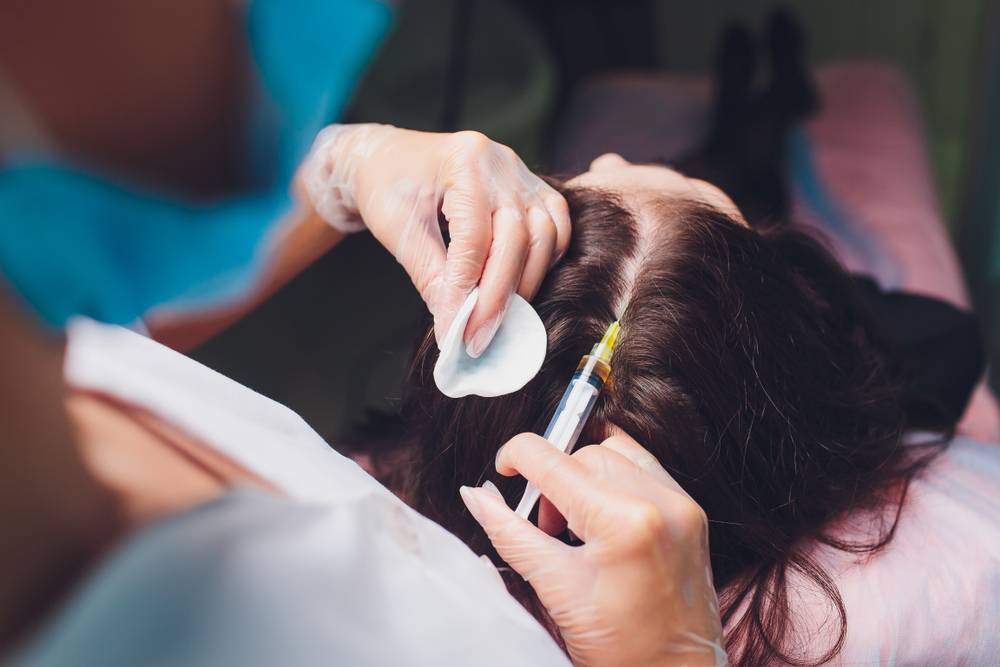
Oral or injectable treatments: when are they recommended for scalp psoriasis?
While many patients with scalp psoriasis find effective relief with topical medications, some cases require a more intensive approach. Indeed, when psoriasis is widespread, severe, or resistant to conventional treatments, oral or injectable medications may be recommended . These forms of treatment are often considered when the patient's well-being and quality of life are significantly affected.
Oral medications , such as retinoids or immunosuppressants, work by targeting inflammation at its source. These treatments can regulate the immune system, thereby reducing the inflammation and accelerated cell turnover characteristic of psoriasis. Due to their potent effects on the immune system , their use is generally associated with regular monitoring by a dermatologist or specialist to track potential side effects.
Injectable treatments, on the other hand, are often biologics. These medications specifically target certain parts of the immune system involved in psoriatic inflammation. Numerous clinical studies have demonstrated the effectiveness of these products , particularly for patients whose symptoms are resistant to topical treatments or oral medications.
It is crucial to note that the recommendation for oral or injectable treatment depends on several factors, such as the affected body surface area, the severity of the lesions, and the patient's response to previous treatments. Therefore, an accurate diagnosis and informed opinion from a dermatologist are essential. These treatments, while potentially very effective, are not without risks. Side effects can vary depending on the medication used.
What are the potential side effects of medical treatments for psoriasis?
Medical treatments for scalp psoriasis have revolutionized the quality of life for many patients. However, like all medications, they can have side effects . These depend on the type of treatment, the duration of use, and other factors specific to each patient.
For topical treatments, corticosteroids are among the most commonly prescribed. While effective in reducing inflammation and itching, these products can, in the long term, thin the skin or cause scalp irritation . Some patients may also experience allergic reactions to the ingredients in these products.
As for oral medications, taking them can influence other bodily systems. For example, some can affect liver or kidney function , while others can increase the risk of infections due to their immunosuppressive effect. It is therefore crucial for these patients to undergo regular checkups to monitor for potential side effects.
Injectable treatments, while offering remarkable efficacy, can also have side effects. Some patients may experience reactions at the injection site, while others may be at risk of severe infections, tuberculosis, or other autoimmune diseases.
Finally, phototherapy, another treatment option for psoriasis, can increase the risk of skin cancer in some patients, especially when combined with prolonged use of photosensitizing drugs.
We recommend these other pages:
- What do you need to know about scalp psoriasis for effective treatment?
- What are the symptoms of scalp psoriasis?
- What are the possible causes of scalp psoriasis?
- What are the impacts of psoriasis on hair?
- Hair treatment and psoriasis: what are the suitable hair products?
- Hair treatment for psoriasis: what advice is there?


